The Complete History of Fila
A household name known so endearingly as the manufacturer of the Disruptor II style, FILA has been around for years - and we mean, YEARS. But, it's for very good reason. FILA, as we know it, is a brand riddled with heritage; it's a brand that has always been at the forefront of sporting leisurewear, taking the big stage regularly, too.
But, what do we actually know about FILA? Well, we've managed to get our hands on the book that explains it all. The book that takes us 110 years back in time to day one, landing in 1911 Biella - the home and birthplace of FILA.
When was FILA Founded?
In case you didn't quite absorb the above, FILA was founded in 1911 - adopting Italy's mountainous Biella region as its home. This is an area of Italy that is rife with those who have forged a life from the ground up; hard-working, resilient and most importantly, passionate about the things they love. In fact, beyond FILA it was here that Italy's industrial revolution began as a handful of smaller factories prepared for a boom in economic growth.
Before venturing into footwear and apparel, the Fila family excelled in woodwork - taking to textile after repairing the frames of local weavers. Alas, there was a new market to explore; an industry that was full of prospective consumers willing to pay for Giovanni Fila's expertise and keen eye for details. This realisation birthed Fratelli FILA, a factory solely focussed on carded and combed wool - a typical manufacturing process in Biella factories.

The FILA Timeline
It wasn't long before FILA stepped beyond the manufacturing of woolen goods, and began making underwear for, well, quite literally everyone. Now, remember this moment, because it's what kickstarted FILA's global domination. Vertical growth knew no bounds as the family invested in major textile manufacturing complex, acquiring space for expansion and growing a workforce of 2500 employees. Quite the boom, if you ask us!
Now, the family brand split in two come 1968, one half including their underwear-based Maglificio Biellese MABY branch with the addition of coloured knitwear - all taking place in-house, from the spinning right up until distribution. After all, if it's in-house then nothing can go wrong, right? Mmm, wrong. Although MABY was the brand's most popular platform for quite some time, this certainly didn't last forever. Trends changed and so did the group's intentions. To keep up, their goals had to change - this was where Enrico Frachey, the man in charge of designing and implementing a renovation strategy.
Game on.
Rebranding to FILA SPORT
In 1973, Maglificio Biellese MABY became FILA SPORT - leading the way for modern sportswear at the time. Franchey decided it was wise to focus on a specific part of the everyday life, perhaps and area often overlooked for one reason or another. Spare time, free time, recess, a moment away from the hustle and bustle where comfort was absolutely key. Whilst this may have been a relatively new concept, it had always been there - it had always been the period of time for sporting activities where the comfort provided by elasticated, ribbed fabric could be pulled directly from underwear.
That year, a new age of FILA began. It became famous across the globe, renowned for its F-box logo seen upon the chest of tennis players as they rocked the first cotton tee manufactured specifically for the court. During competitive tennis matches, we saw the red and blue branding for the first time, too. A lot of firsts, for a brand heading in the right direction!

Enrico Frachey
Now a minimalistic, memorable and immediately modern logo had been distinguished, it was time to take this ecru toned F-box logo beyond the Italian border. Headquarters were set up in France, Germany and the US - all supervised by Mr Enrico Frachey.
FILA managed to flip the script on free time, filling the market with casual wear that would eventually become a staple in the wardrobe of athletes, gangsters, and the everyday geezer alike. They missed no chances, didn't fumble the bag once and grew further than they could have ever dreamed
This is just one of the reasons that TOWER considers FILA to be a member of our closest family; the inner-circle of all things footwear, heritage and fashion.
The Disruptor Revival

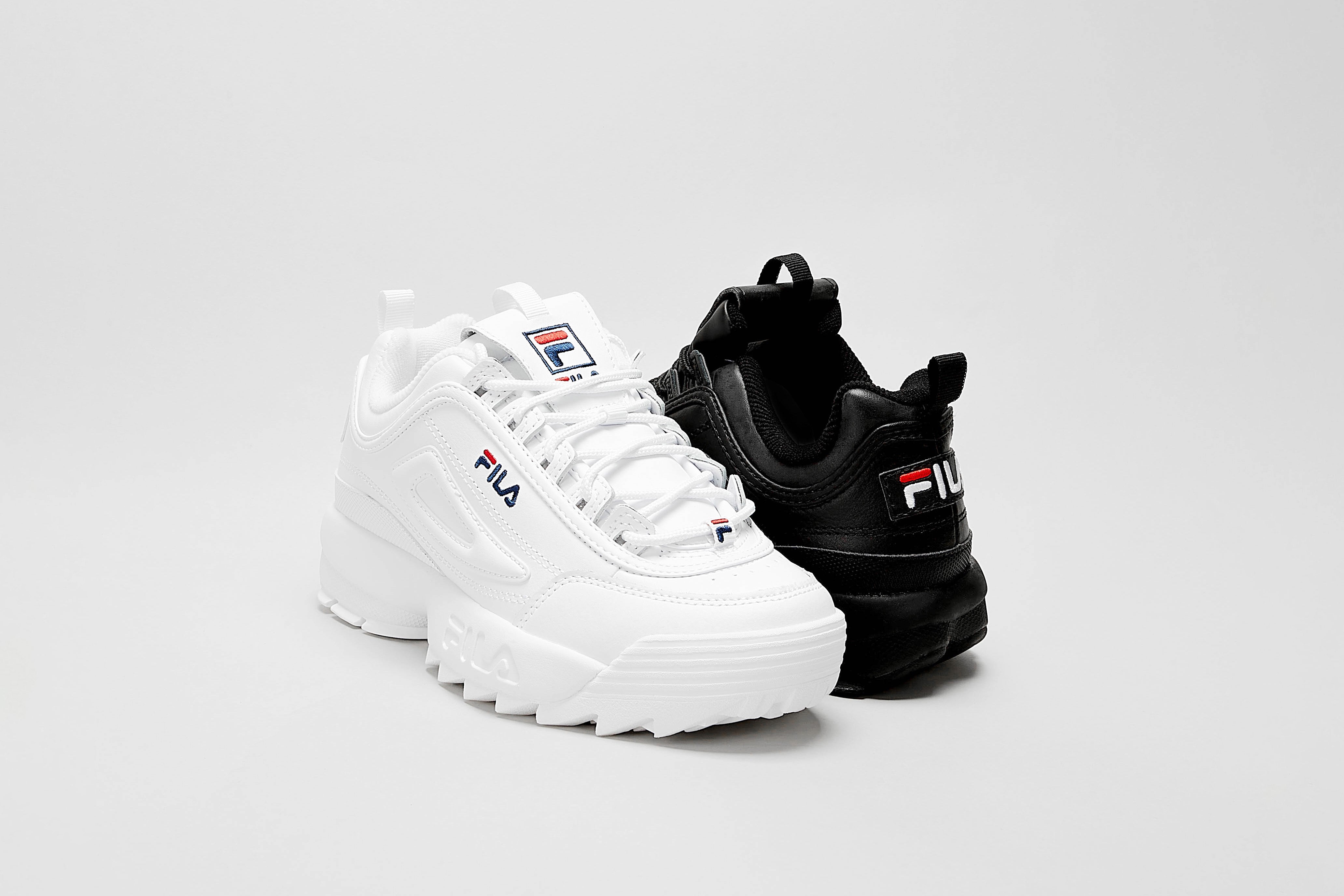
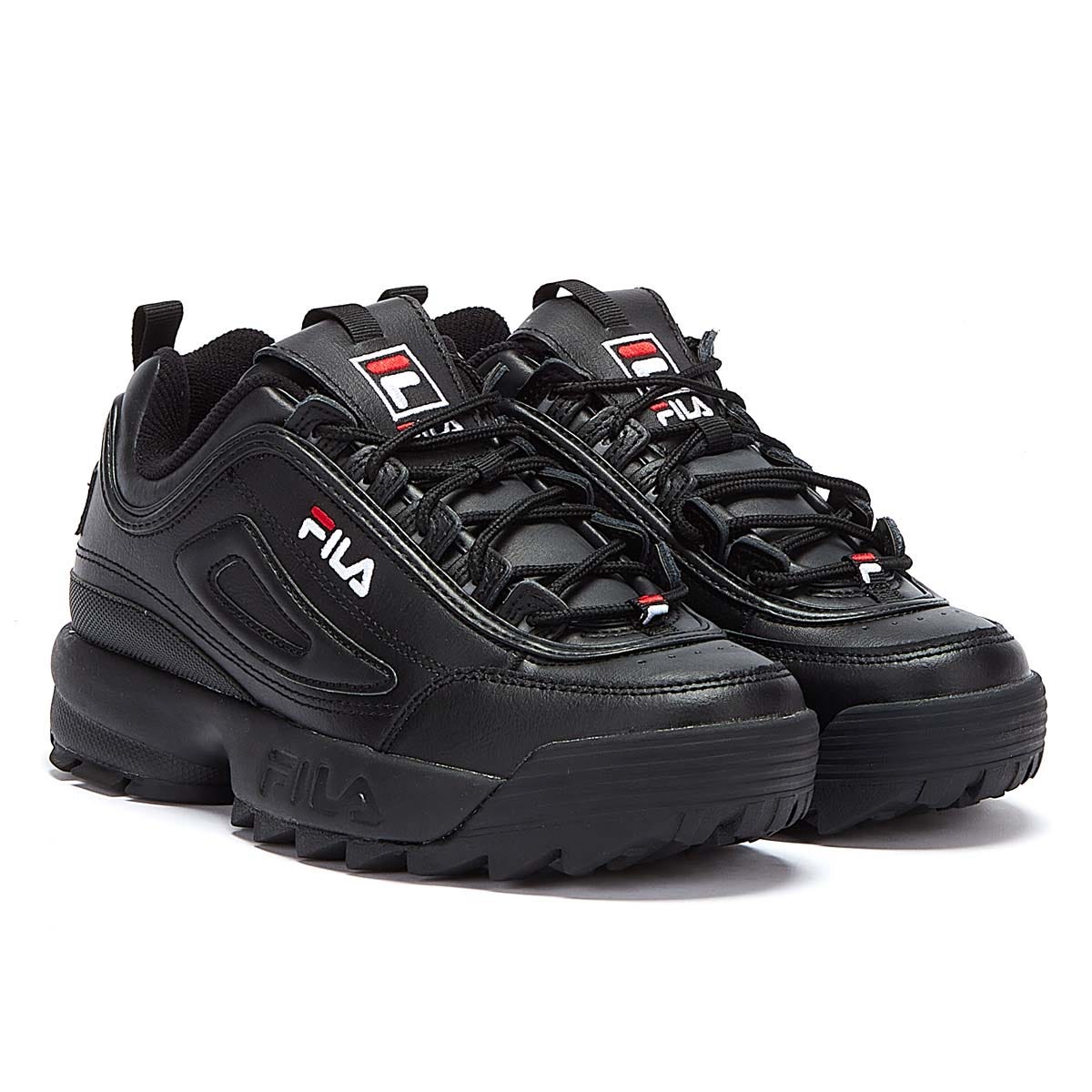
While Fila's heritage is firmly rooted in the tennis courts and ski slopes of the 1970s, its modern resurgence owes everything to the 1990s. As the "dad shoe" trend swept the globe in the late 2010s, Fila dug into its archives and brought back the Disruptor II. Originally released in 1996, its aggressive, sawtooth sole and unapologetically chunky silhouette perfectly captured the zeitgeist. It wasn't just a nostalgic reissue; it became a defining shoe of the decade, introducing Fila's bold Italian design language to a completely new generation of sneakerheads.
Shop FILA at TOWER

If you'd like to bag your first (or 100th) pair of FILA with TOWER, then head into your local shopfront or join us online at tower-london.com. We're not short of a pair or two, so put your faith in London's fastest growing independent footwear retailer.