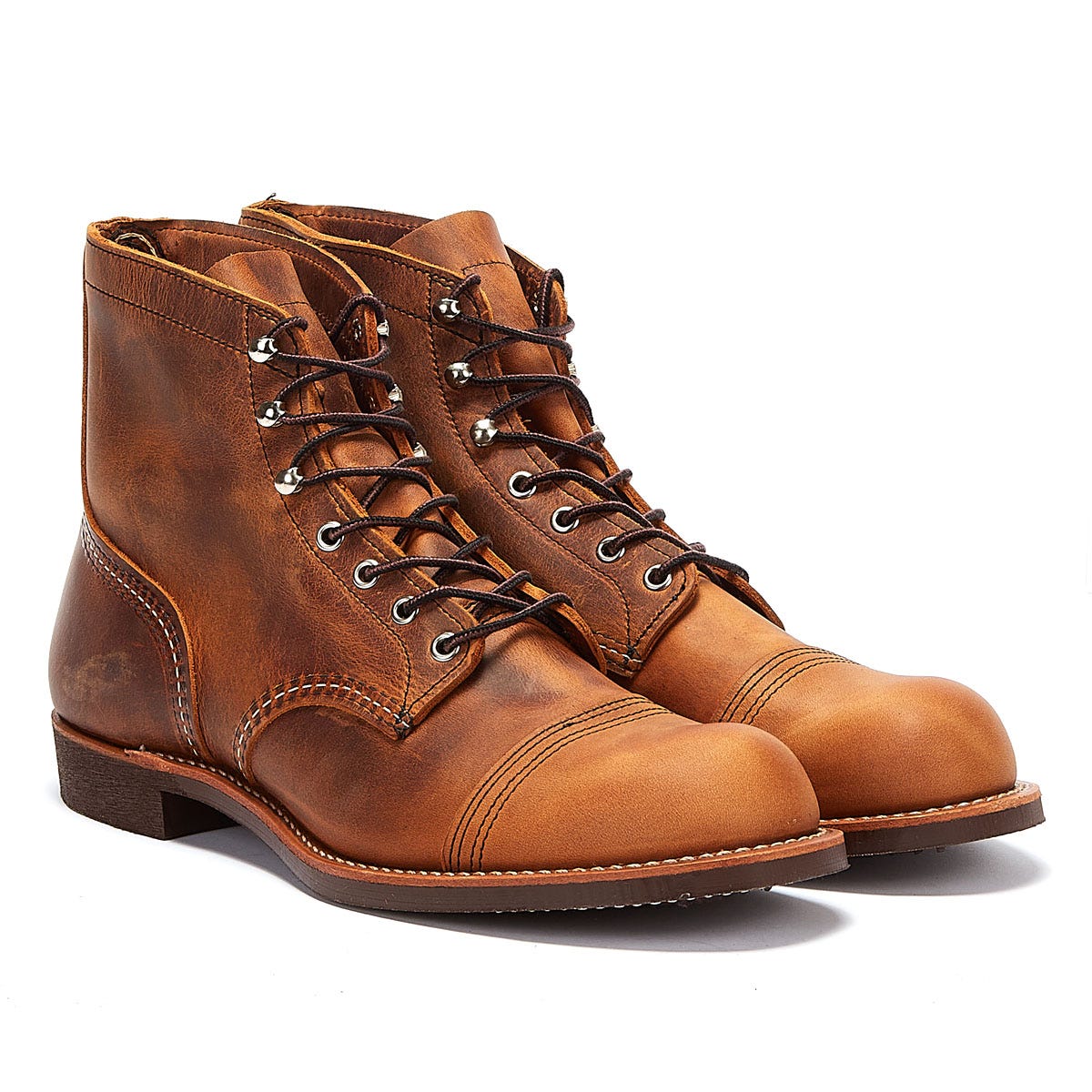
 Red Wing Iron Ranger Mens Copper Boots
View product
Red Wing Iron Ranger Mens Copper Boots
View product
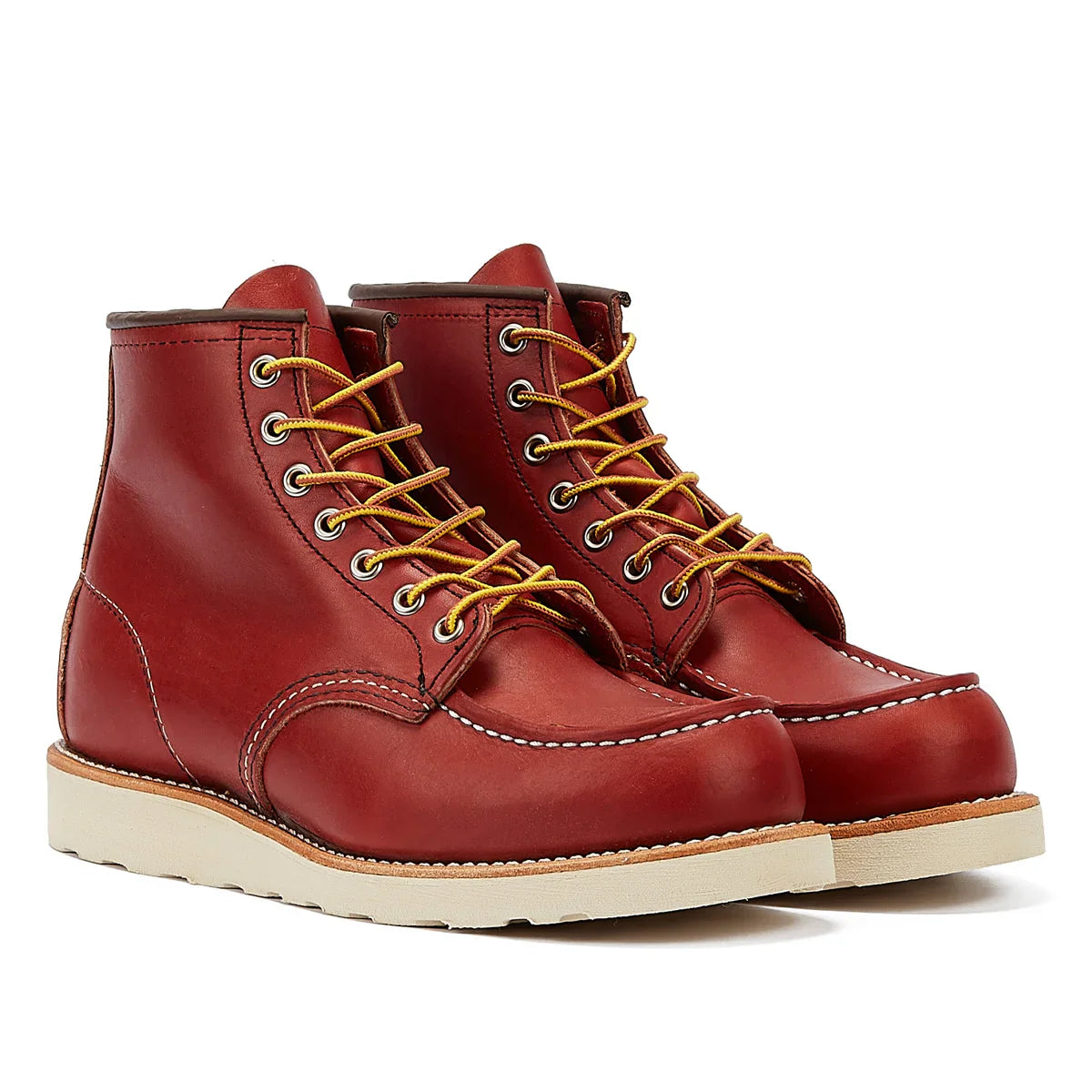
The Story of Red Wing Shoes: 120 Years of American Craft
Few boots have carved their way into both American industry and global style quite like Red Wing. Across more than a century of making hard-wearing footwear in Minnesota, the brand has stayed true to an uncompromising idea: build boots that work, last and improve with age. The result is a legend of leather and stitch that began in a small Midwestern town and now strides confidently from cobbles to countryside around the world.
From a Main Street vision to an American icon
The story starts in 1905, in the river town of Red Wing, Minnesota. Charles Beckman, a local shoe merchant who spent years fitting workers and hearing exactly what failed them on the job, decided to build something better. He founded the Red Wing Shoe Company with a simple brief: honest boots for farmers, miners and labourers who needed trustworthy protection underfoot. Early patterns borrowed from traditional moccasin construction and rugged cap-toe designs, creating a vocabulary of silhouettes that remain instantly recognisable more than a century later.
Beckman’s approach was both pragmatic and visionary. He sourced materials close to home, insisted on exacting standards in the factory, and designed for function first, then form. That insistence on purpose-built footwear carried the brand through American booms and busts, across railways and logging camps, and onto the feet of generations who valued durability above trends. In time, the practicality that made Red Wing indispensable at work also made it irresistible to those who admired straightforward, well-made things.
Leather with a lineage: the S.B. Foot Tannery
At the heart of every great boot is great leather. Red Wing takes that to its logical conclusion by controlling its own supply. Where does Red Wing get their leather from? The answer is the S.B. Foot Tannery in Minnesota, the company’s own tannery and the source of the leathers used across its boots. This vertical integration is unusual in modern footwear, and it matters. It means the hides are selected, tanned and finished to meet the exact needs of the factory just down the road, not the compromises of a commodity marketplace.
The tannery is known for robust, oil-tanned, full-grain leathers that balance strength with a supple hand. Those properties are not an accident. Oil tanning resists water and everyday scuffs, while full-grain cuts preserve the natural fibres that give leather its depth and longevity. When you lace up a pair of Red Wings and notice the way the vamp creases cleanly rather than cracking, or see the patina deepen in high-wear spots, you are experiencing the character that begins in the drum at S.B. Foot. For anyone asking where Red Wing gets its leather, it is reassuring to know that the answer stays close to home, in the same Minnesota community where the boots are crafted.
The craft underfoot: why the Goodyear welt matters
Red Wing’s toughness is not just about leather; it is engineered into the construction. At the centre of that craft is the Goodyear welt, a method that bonds upper, welt and sole in a way that is both resilient and repairable. In practical terms, the upper is stitched to a leather welt, which is then stitched to the sole. Between sits a layer of cork that gradually moulds to your foot, creating a custom comfort that improves with miles.
What makes this construction special is its combination of structure and serviceability. Because the upper is not glued directly to the sole, the two can be separated cleanly when the tread finally wears. A skilled cobbler—or indeed Red Wing’s own service teams—can remove and replace the outsole without disturbing the upper, extending the life of the boots for years. The double-row stitching many Red Wing styles use adds stability and a degree of water resistance, making them dependable in mixed conditions. If you have ever wondered what is so special about Red Wing boots, begin with this: Goodyear welt construction, American-made leather from S.B. Foot, and the knowledge that a resoling brings them back to life rather than sending them to landfill.
From jobsite staple to heritage style
For decades, Red Wing boots were simply tools: worn hard, repaired often and prized for reliability. As tastes evolved and people began to seek authenticity in what they wore, those same qualities took on a different kind of allure. The boots that once climbed scaffolds and crossed logging trails started appearing in cafés and studios, appreciated for their honest lines, substantial feel and the way they age beautifully. The moc-toe profile, inspired by traditional North American footwear, and the work-ready round-toe patterns with cap details became emblems of a broader heritage movement that values provenance and craft.
Choosing between classic silhouettes has become a rite of passage for many enthusiasts. If you are weighing up a toe-cap style with a more structured feel against the roomy comfort and distinctive stitching of a moc-toe, our detailed comparison of the Red Wing Iron Ranger vs Moc Toe can help you decide which better suits your stride. The through-line in both is unmistakable: stout leather from S.B. Foot, purposeful patterns refined over generations, and soles ready for years of wear.
Made in Minnesota, worn worldwide
A common question, especially from first-time buyers, is simple: are Red Wings made in the USA? The Heritage line—the collection that includes the brand’s most iconic styles—is made in Red Wing, Minnesota, continuing a lineage that stretches back to Charles Beckman’s original factory. That sense of place is not a marketing flourish; it is a manufacturing reality anchored in local hands, local leather and a town that shares its name with the brand.
Another point of curiosity is ownership. Who owns Red Wing? The company remains family-owned, independent of any multinational conglomerate. That independence has allowed a long-term view of quality and service, not just quarterly targets. Under the same umbrella sit several specialist brands—Vasque, Irish Setter and WORX—that speak to adjacent needs in outdoor and work-ready footwear. But the heartbeat of the story—boots that work hard and age well—continues in Red Wing’s own lines.
With attentive care, those lines last. Leather this substantial rewards a little routine: brushing off dust, conditioning to replenish oils, and, when the time comes, choosing a resoling rather than a replacement. If you would like a step-by-step on breaking them in gently and keeping the leather nourished, our guide on how to break in and care for Red Wing boots has all the essentials. It is part of the same philosophy that underpins the brand: invest in something well made, then help it go the distance.
Why they endure
Ask devotees what elevates Red Wing beyond mere footwear and a pattern emerges. There is the tactile satisfaction of thick, American leather that softens without losing its backbone. There is the engineering seriousness of a Goodyear welt and cork footbed, promising seasons of comfort and the option to refresh the sole when needed. There is the honesty of a boot that looks better scuffed and shaped by your life, rather than pristine and untouched. And there is the assurance, for many, that the Heritage line is still crafted in the same Minnesota town that gave the brand its name.
For some, the appeal is practical: a pair that can commute, work and wander without blinking. For others, it is emotional: a meaningful connection to a tradition of American craft. Either way, what is so special about Red Wing boots comes down to specifics—a resolable build, robust leathers from the S.B. Foot Tannery, and designs refined by more than a century of real-world use—that add up to something greater than the sum of their parts.
Find your pair with TOWER London
Whether you lean toward a moc-toe classic with generous forefoot room or a sleeker, toe-capped profile with a touch more structure, the appeal is the same: timeless materials, patient craftsmanship and an investment in wear that rewards you every time you lace up. If you are deciding between hallmark silhouettes, start with our side-by-side look at the Iron Ranger and the Moc Toe to understand fit, feel and styling nuances, then consult our care guide to set them up for success.